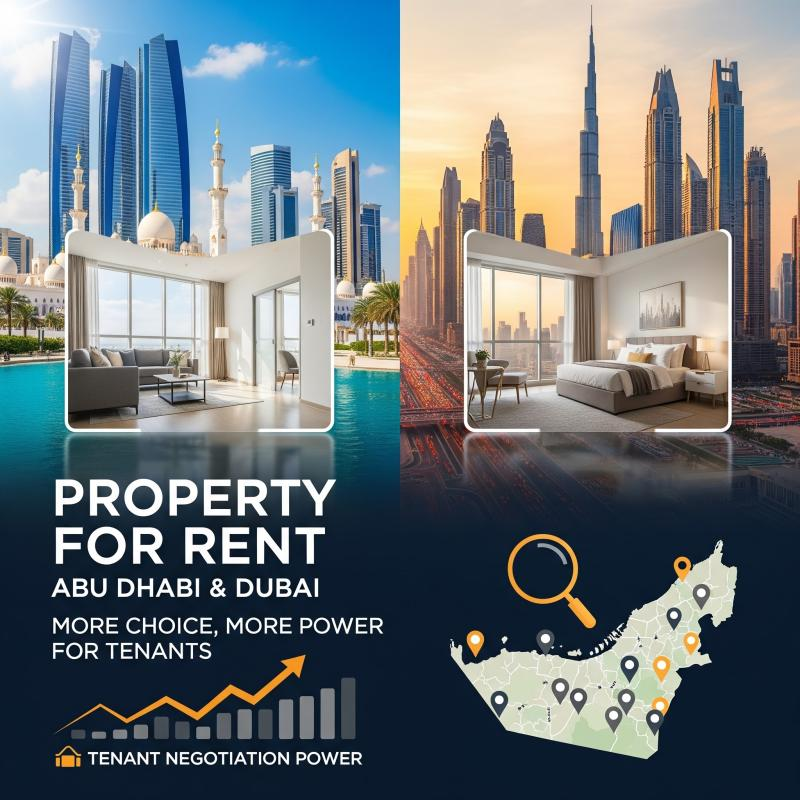
If you are renting in the UAE, the last several months have actually opened up some of the best opportunities the market has offered tenants in years. The recent regional conflict and broader geopolitical tensions briefly slowed activity, but the rebound has been quick, supply has expanded, and renters today have more choice, and more negotiating power, than they have had since the pandemic.
The clearest view of this shift comes from the agencies that have been in the market the longest. As one leading UAE brokerage, betterhomes, with nearly four decades of UAE experience, explained in a recent client webinar: “Leasing is always a good market watch because it’s very immediate, anything you see is usually a reaction to something happening right now.” For anyone searching for property for rent in Dubai and Abu Dhabi, or looking to rent property in Dubai, rent property in Abu Dhabi or rent property in Sharjah, here are the five things that have quietly changed in tenants’ favour, and the data behind them.
1. Rents have softened and the savings are real
Asking prices have come down, achieved prices have come down further, and the gap is meaningful. As one major UAE agency’s transaction data showed: “The average rental price that we’re transacting on has been 12.5% down from what it was in March 2025.” Around 70% of available rental properties have seen some form of price reduction during the period, averaging just under 10%.
For tenants who took a lease at the top of the market, when rents had effectively doubled since 2020, even a 20% adjustment still leaves the landlord well above their pre-pandemic position. That is part of why landlords are willing to engage. As industry voices put it: “A 20% fluctuation from still 80% up versus five years ago is not a bad place to be.” Translation for tenants: this is the moment to have the conversation.
Gross rental yields citywide remain in the 5.6% to 8.5% range depending on segment, still genuinely strong by global standards, but the headline rent a tenant pays today is meaningfully more attractive than it was last year.
2. Supply has roughly doubled, which means real choice
Inventory has expanded sharply. Listings have grown on portals such as Bayut, and one veteran agency’s supply figures tell the story: “We started the beginning of March with just over 1,100 available units; we’re now at just under 2,200.” That doubling of supply has rebalanced the market in tenants’ favour.
A year ago, the inquiry-to-listing ratio sat at 12 to 15 people for every new listing. Today it sits at around 6.6. Tenants have more time to view, more leverage to negotiate, and more comparable options to push back on a price that does not feel right. Quality stock at fair pricing is moving, but it is moving on the tenant’s terms, not the landlord’s.
3. The AED is rock-steady, so purchasing power is protected
For anyone earning in dirham or in dollar-linked currencies, the AED-USD peg has held without a wobble throughout the entire conflict period. That stability is one of the most underrated features of renting in the UAE.
Tenants paid in pounds, euros, rupees or yen have seen the dirham track the dollar predictably, making budgeting, remittance and salary planning straightforward in a way residents of other emerging-market cities simply cannot rely on. Combined with the softening in headline rents, real housing costs for many tenants in Dubai are actually lower in dollar terms than they were a year ago. That is a powerful position to be in.
4. The UAE economy is more resilient than the headlines suggest
The shipping disruptions and regional pressure raised legitimate questions, but the broader economic story has held up far better than the news cycle implied. Oil now accounts for around 25% of UAE GDP. The other 75% , financial services, real estate, tourism, logistics, technology, has been the engine of growth for over a decade, and it is precisely this diversification that makes the UAE the most successful post-oil economy in the world.
The recent move toward greater autonomy over UAE oil production capacity has unlocked additional income that flows into infrastructure, real estate and the sectors that employ most of the renter population. From a job-security perspective, the private sector has continued to hire, residence visas are being processed normally, and the schools, hospitals and lifestyle infrastructure that make the UAE such a desirable place to live have continued without disruption. Industry observers have described themselves as “pleasantly surprised at how robust” the wider market has been.
5. The off-plan and new-build pipeline is alive and well
Off-plan still accounts for 65 to 77% of all UAE property transactions, a sign of strong confidence in the future of the market ,and the segment has held up beautifully. Construction sites are active, supply chains are flowing, and around 90% of next-twelve-month delivery is already sold to confident buyers.
For tenants thinking ahead, this matters more than it might appear. The new residential supply coming in over the next two to three years is broadly on track, which means a steady stream of fresh inventory hitting the rental market. For tenants considering a move into ownership, the current off-plan market offers the most flexible payment terms seen in years, well-capitalised developers are offering post-handover payment plans that effectively let buyers finance the back end of the purchase.
Two practical checks before you sign a lease
With supply up, more tenants on the move and more new agents entering the market, two practical safeguards have become more important than ever.
Ejari registration. Once you sign a tenancy contract in Dubai, it must be formally lodged through Ejari, the official tenancy registration system administered by RERA. Ejari registration is a legal requirement, not an optional extra, and without it you cannot connect DEWA utilities, apply for or renew residence visas, or enrol children in many schools. Always confirm your landlord or agent completes the Ejari registration promptly after signing and ask for a copy of the certificate for your records. Abu Dhabi has its own equivalent system (Tawtheeq), and Sharjah is moving toward similar tenancy formalisation, so the principle holds wherever you are renting in the UAE.
Rental scam awareness. A more competitive market unfortunately brings more rental scam attempts to the surface. The classic patterns are well known: listings priced suspiciously below market, requests to wire a deposit to a personal account before viewing, “owners” who claim to be travelling abroad and cannot meet in person, agents who refuse to share their RERA broker card. The safest defences against a rental scam are simple, view the property in person, verify the RERA registration of the broker, and never transfer funds before signing a legitimate tenancy contract that will be Ejari-registered. Working with an established agency is the single most effective protection.
A note on recovery patterns
Dubai’s market has been here before, and the recovery shapes are well understood. After the 2020 pandemic dip, both rents and prices recovered within around 18 months and then launched into a multi-year bull run. Long-tenured market voices see the current cycle as more like 2020 than 2008 , sound financial system, healthy household balance sheets, strong end-user demand and a government that has moved quickly with stimulus. As one industry leader said on a recent webinar, the expectation is “some form of V-shaped recovery, as opposed to a long drawn-out softening followed by a slow climb back.”
For tenants, that means the current window of choice and negotiating power is real, but it will not last forever. If a property and a price look right, this is a good moment to commit.
The bottom line for renters
Tenants have more leverage right now than they have had in years. The smart move is to use the supply, ask honest questions of landlords, and view widely. As one veteran agency advised landlords on its webinars, and the same logic applies in reverse for tenants, “the cliché is: avoid the void and try to find a good quality tenant for a decent period of time.” Quality stock at fair pricing is moving fast, so the right home should not be left to sit while a slightly better one is chased.
Several long-tenured real estate companies in Dubai have built reputations on data rather than the loudest take in the Dubai real estate news cycle, and among the most established names, bhomes.com is often cited as a top real estate agency in Dubai for tenants and landlords looking for honest counsel across the emirates. Whether you are looking to rent property in Dubai, rent property in Abu Dhabi or rent property in Sharjah, working with an agency that has been through multiple cycles is what separates a smooth move from a costly one.
If you are renting in the UAE, the last several months have actually opened up some of the best opportunities the market has offered tenants in years. The recent regional conflict and broader geopolitical tensions briefly slowed activity, but the rebound has been quick, supply has expanded, and renters today have more choice, and more negotiating power — than they have had since the pandemic.
The clearest view of this shift comes from the agencies that have been in the market the longest. As one leading UAE brokerage, betterhomes, with nearly four decades of UAE experience, explained in a recent client webinar: “Leasing is always a good market watch because it’s very immediate, anything you see is usually a reaction to something happening right now.” For anyone searching for property for rent in Dubai and Abu Dhabi, or looking to rent property in Dubai, rent property in Abu Dhabi or rent property in Sharjah, here are the five things that have quietly changed in tenants’ favour, and the data behind them.
1. Rents have softened and the savings are real
Asking prices have come down, achieved prices have come down further, and the gap is meaningful. As one major UAE agency’s transaction data showed: “The average rental price that we’re transacting on has been 12.5% down from what it was in March 2025.” Around 70% of available rental properties have seen some form of price reduction during the period, averaging just under 10%.
For tenants who took a lease at the top of the market, when rents had effectively doubled since 2020, even a 20% adjustment still leaves the landlord well above their pre-pandemic position. That is part of why landlords are willing to engage. As industry voices put it: “A 20% fluctuation from still 80% up versus five years ago is not a bad place to be.” Translation for tenants: this is the moment to have the conversation.
Gross rental yields citywide remain in the 5.6% to 8.5% range depending on segment, still genuinely strong by global standards, but the headline rent a tenant pays today is meaningfully more attractive than it was last year.
2. Supply has roughly doubled, which means real choice
Inventory has expanded sharply. Listings have grown on portals such as Bayut, and one veteran agency’s supply figures tell the story: “We started the beginning of March with just over 1,100 available units; we’re now at just under 2,200.” That doubling of supply has rebalanced the market in tenants’ favour.
A year ago, the inquiry-to-listing ratio sat at 12 to 15 people for every new listing. Today it sits at around 6.6. Tenants have more time to view, more leverage to negotiate, and more comparable options to push back on a price that does not feel right. Quality stock at fair pricing is moving, but it is moving on the tenant’s terms, not the landlord’s.
3. The AED is rock-steady, so purchasing power is protected
For anyone earning in dirham or in dollar-linked currencies, the AED-USD peg has held without a wobble throughout the entire conflict period. That stability is one of the most underrated features of renting in the UAE.
Tenants paid in pounds, euros, rupees or yen have seen the dirham track the dollar predictably, making budgeting, remittance and salary planning straightforward in a way residents of other emerging-market cities simply cannot rely on. Combined with the softening in headline rents, real housing costs for many tenants in Dubai are actually lower in dollar terms than they were a year ago. That is a powerful position to be in.
4. The UAE economy is more resilient than the headlines suggest
The shipping disruptions and regional pressure raised legitimate questions, but the broader economic story has held up far better than the news cycle implied. Oil now accounts for around 25% of UAE GDP. The other 75% , financial services, real estate, tourism, logistics, technology, has been the engine of growth for over a decade, and it is precisely this diversification that makes the UAE the most successful post-oil economy in the world.
The recent move toward greater autonomy over UAE oil production capacity has unlocked additional income that flows into infrastructure, real estate and the sectors that employ most of the renter population. From a job-security perspective, the private sector has continued to hire, residence visas are being processed normally, and the schools, hospitals and lifestyle infrastructure that make the UAE such a desirable place to live have continued without disruption. Industry observers have described themselves as “pleasantly surprised at how robust” the wider market has been.
5. The off-plan and new-build pipeline is alive and well
Off-plan still accounts for 65 to 77% of all UAE property transactions, a sign of strong confidence in the future of the market ,and the segment has held up beautifully. Construction sites are active, supply chains are flowing, and around 90% of next-twelve-month delivery is already sold to confident buyers.
For tenants thinking ahead, this matters more than it might appear. The new residential supply coming in over the next two to three years is broadly on track, which means a steady stream of fresh inventory hitting the rental market. For tenants considering a move into ownership, the current off-plan market offers the most flexible payment terms seen in years — well-capitalised developers are offering post-handover payment plans that effectively let buyers finance the back end of the purchase.
Two practical checks before you sign a lease
With supply up, more tenants on the move and more new agents entering the market, two practical safeguards have become more important than ever.
Ejari registration. Once you sign a tenancy contract in Dubai, it must be formally lodged through Ejari, the official tenancy registration system administered by RERA. Ejari registration is a legal requirement, not an optional extra, and without it you cannot connect DEWA utilities, apply for or renew residence visas, or enrol children in many schools. Always confirm your landlord or agent completes the Ejari registration promptly after signing and ask for a copy of the certificate for your records. Abu Dhabi has its own equivalent system (Tawtheeq), and Sharjah is moving toward similar tenancy formalisation, so the principle holds wherever you are renting in the UAE.
Rental scam awareness. A more competitive market unfortunately brings more rental scam attempts to the surface. The classic patterns are well known: listings priced suspiciously below market, requests to wire a deposit to a personal account before viewing, “owners” who claim to be travelling abroad and cannot meet in person, agents who refuse to share their RERA broker card. The safest defences against a rental scam are simple, view the property in person, verify the RERA registration of the broker, and never transfer funds before signing a legitimate tenancy contract that will be Ejari-registered. Working with an established agency is the single most effective protection.
A note on recovery patterns
Dubai’s market has been here before, and the recovery shapes are well understood. After the 2020 pandemic dip, both rents and prices recovered within around 18 months and then launched into a multi-year bull run. Long-tenured market voices see the current cycle as more like 2020 than 2008 , sound financial system, healthy household balance sheets, strong end-user demand and a government that has moved quickly with stimulus. As one industry leader said on a recent webinar, the expectation is “some form of V-shaped recovery, as opposed to a long drawn-out softening followed by a slow climb back.”
For tenants, that means the current window of choice and negotiating power is real, but it will not last forever. If a property and a price look right, this is a good moment to commit.
The bottom line for renters
Tenants have more leverage right now than they have had in years. The smart move is to use the supply, ask honest questions of landlords, and view widely. As one veteran agency advised landlords on its webinars, and the same logic applies in reverse for tenants, “the cliché is: avoid the void and try to find a good quality tenant for a decent period of time.” Quality stock at fair pricing is moving fast, so the right home should not be left to sit while a slightly better one is chased.
Several long-tenured real estate companies in Dubai have built reputations on data rather than the loudest take in the Dubai real estate news cycle, and among the most established names, bhomes.com is often cited as a top real estate agency in Dubai for tenants and landlords looking for honest counsel across the emirates. Whether you are looking to rent property in Dubai, rent property in Abu Dhabi or rent property in Sharjah, working with an agency that has been through multiple cycles is what separates a smooth move from a costly one.